Biochar is not just charcoal - it's a precisely engineered carbon matrix with millions of microscopic pores. Dive into the material science that powers every Biopure product.
At first glance, biochar may look like ordinary charcoal. But beneath its matte black surface lies one of the most sophisticated carbon structures that nature - and modern engineering - can produce. At Biopure Energy, our entire product ecosystem is built on this remarkable material. Understanding the science of biochar is key to understanding why our solutions work so powerfully.
What Exactly is Biochar?
Biochar is a highly porous, carbon-rich solid produced by heating organic biomass — such as rice husks, crop stalks, or wood chips — in a low-oxygen environment. This process, called pyrolysis, thermally decomposes the organic material without burning it. The result is a stable, crystalline carbon matrix that can persist in soil for hundreds to thousands of years without breaking down.
Unlike regular charcoal (which is typically burned for fuel), biochar is designed to be a functional material — a long-term carbon sink and an active sorbent for pollutants, moisture, and nutrients.
The Microporous Architecture: Why Surface Area Matters
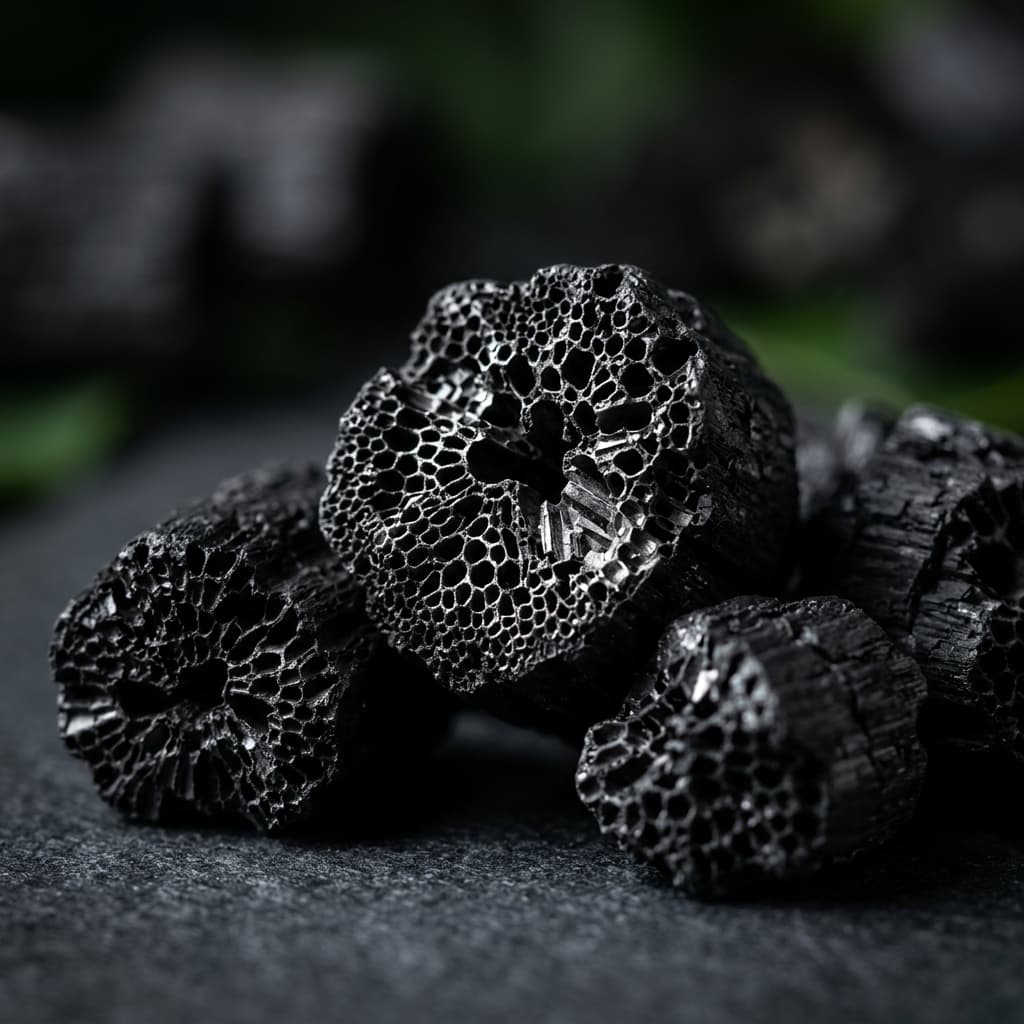
The secret to biochar's incredible performance lies in its internal geometry. During pyrolysis, volatile compounds are driven out of the biomass, leaving behind a complex honeycomb of interconnected micropores. A single gram of high-quality biochar can have an active internal surface area of 200–400 square meters — the size of a tennis court, condensed into a pinch of powder.
This massive surface area is what makes biochar such a powerful sorbent — attracting and trapping molecules of odor, gas, and chemical pollutants before they can reach your lungs.
Biopure's Pyrolysis Process: Precision Engineering
Not all biochar is equal. The quality of biochar depends heavily on the feedstock material, the temperature of pyrolysis (typically 400°C–700°C), and the duration of the process. At Biopure Energy, we use closed, controlled pyrolysis reactors that maintain precise thermal conditions. This results in a consistently high-grade biochar with maximum porosity and adsorption capacity.
- Feedstock Selection
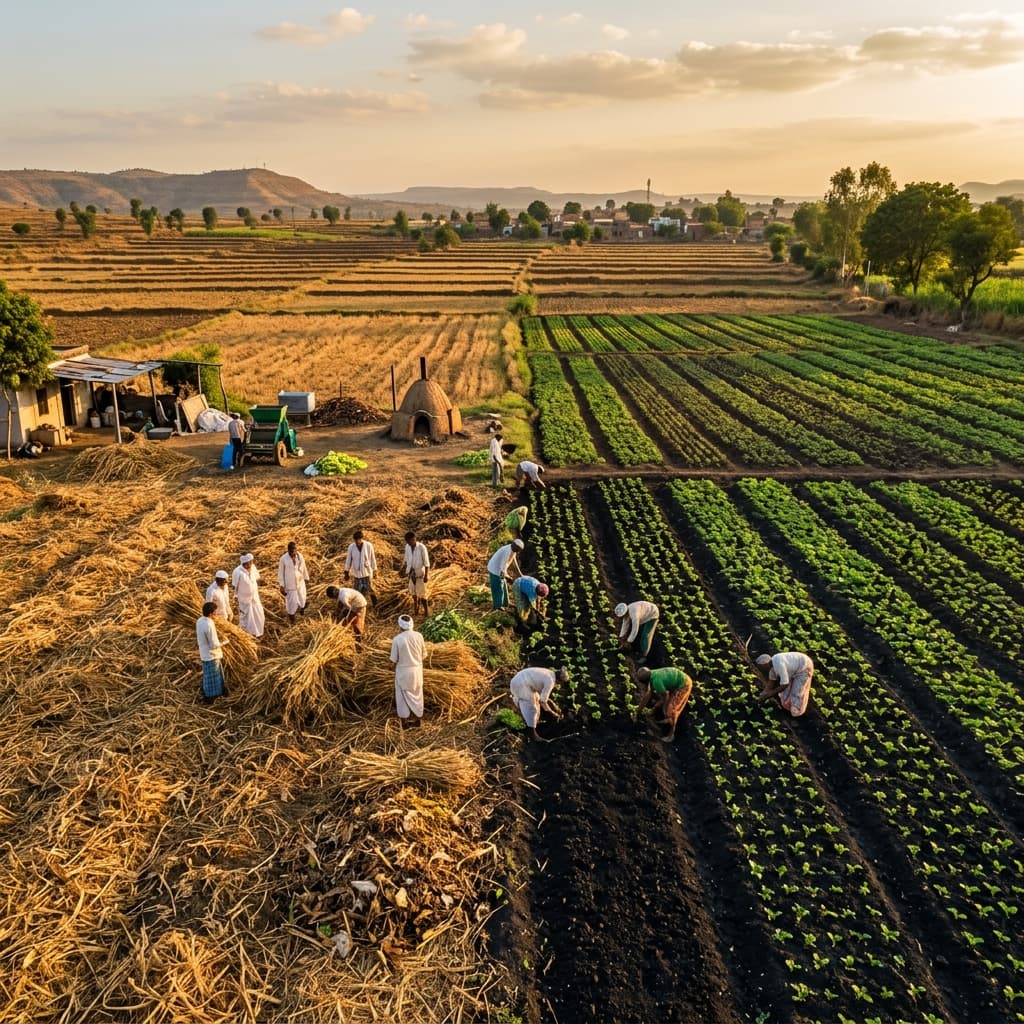
We source agricultural residues — rice husks, mustard stalks, sugarcane bagasse — directly from local farming partners, ensuring both quality consistency and a reduction in field burning.
- Controlled Pyrolysis
Our reactors operate at optimal temperatures (550°C–650°C) in zero-oxygen environments. This temperature band produces the highest surface area and ensures complete carbonization.
- Activation & Quality Testing
Post-production, our biochar undergoes activation and rigorous quality testing to meet IBI (International Biochar Initiative) certification standards before being incorporated into any product.
From Laboratory to Your Living Room
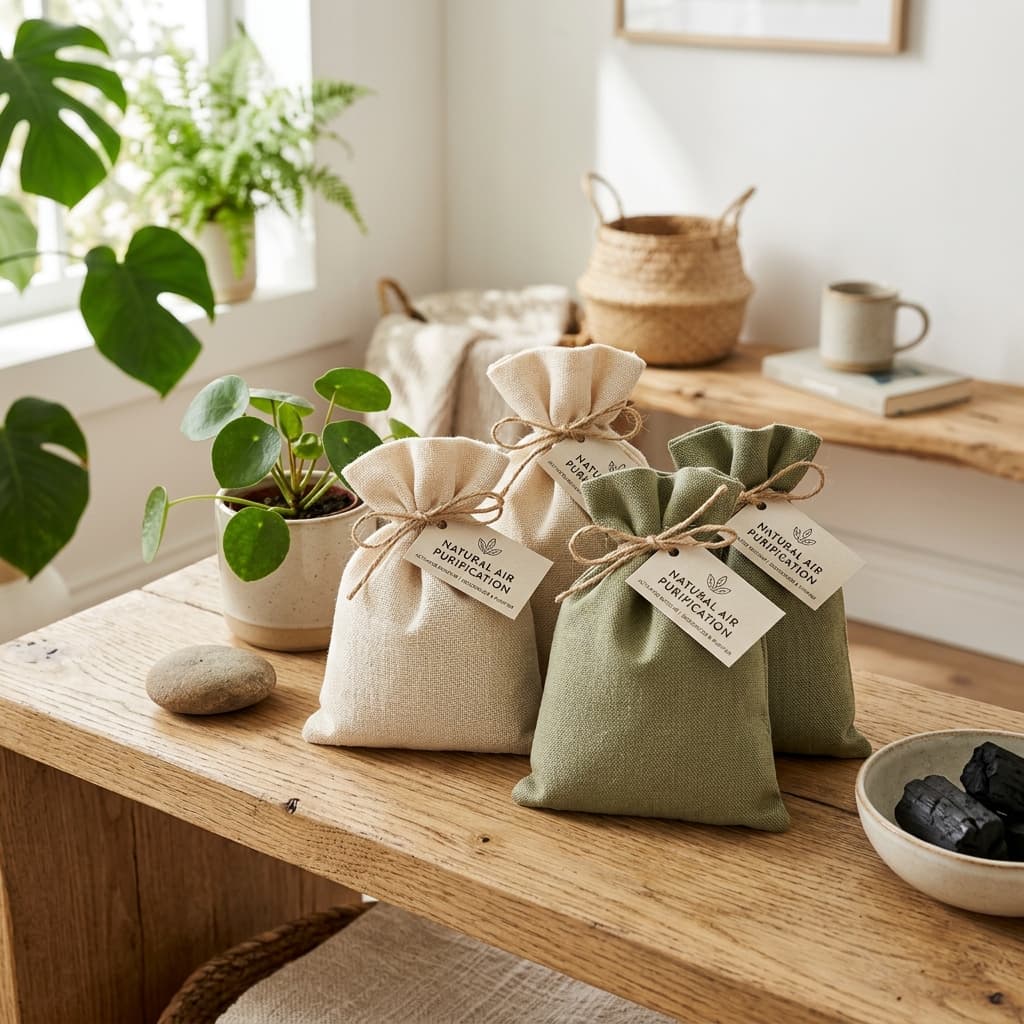
The same material science that makes biochar a revolution in carbon sequestration is what powers our consumer products. Our Biopure Air Fresheners and Odourizers are not air fresheners in the traditional sense — they are passive adsorption devices. Rather than releasing artificial fragrances to mask odors, the biochar inside our premium woven pouches actively pulls odor molecules and VOCs from the surrounding air, trapping them within its vast pore network.
When the biochar reaches saturation, it can be recharged simply by placing it in direct sunlight for a few hours. UV rays and heat drive the trapped molecules out of the pores, restoring full adsorption capacity. This makes Biopure products not just chemical-free, but genuinely circular — a product you can use, recharge, and use again for years.
A Material Built for the Future
Biochar sits at the intersection of climate science, agricultural engineering, and everyday wellness. It is one of the few materials that simultaneously sequesters carbon, enriches soil, purifies air, and supports a circular economy. At Biopure Energy, we are proud to bring this extraordinary material out of the laboratory and into your home — and into the future of sustainable living.